Compare the measurement method as well as the number
Body measurements and flat garment measurements are different. A pit-to-pit width is measured across the shirt, while a body chest is measured around you. A shirt also needs ease for movement. Do not treat a doubled pit-to-pit number as the maximum body size it will fit.
- Button a shirt that already fits you and lay it flat without stretching it.
- Record pit-to-pit chest, shoulder seam to seam, sleeve length and back length. Note exactly where each measurement begins.
- Compare with the current size guide using the same method.
- Fasten the collar if you will wear a tie, sit down and reach forward. The placket should remain comfortable.
Regular, slim and tailored labels vary between brands and styles. The best size may change when you layer a tee or want to tuck the shirt. Shoulder alterations can be complex and costly; ask a tailor about the particular garment instead of relying on an absolute rule.
Continue reading: Bold Printed Shirts up to 6XL for Bigger Men · Shirt Collars & Cuffs Explained: Cutaway, Spread, One-Piece, Single vs.
Find a printed shirt after checking your fit. Check the product page for the current fabric, measurements, price and available sizes.
Explore fit, fabric and care in the Claudio Lugli journal.
Ask a tailor what separates a shirt that looks expensive from one that merely is, and the answer is rarely the fabric, the label or even the print. It is the fit. A perfectly cut shirt in a modest cloth will always outshine a luxurious one that hangs wrong, and nowhere is this more true than with a statement shirt, where every extra inch of loose fabric distorts the very design you bought it for. This is the complete guide to how a shirt should fit: the five checks that matter, in the order that matters, and the details that change when your shirt is doing more than sitting quietly under a jumper.
Start With the Shoulders
The shoulder seam is the foundation of the entire shirt, and it is a measurement that is often difficult and expensive to alter. The seam where the sleeve meets the body should sit precisely at the edge of your shoulder bone, the point you can feel where the shoulder ends and the arm begins. If the seam droops down onto your upper arm, the shirt is too big and everything below it, chest, sleeve, hem, will follow suit. If it pulls in towards your neck, the shirt is too small and you will feel it the first time you reach across a table.
Check this first, before you look in the mirror at anything else. A tailor can take in a torso, shorten a sleeve or adjust a hem, but shoulders are structural. Get them right and the rest of the shirt has a fighting chance; get them wrong and alterations may be impractical; ask a tailor before buying.
The Collar Test
A collar should close comfortably with room for two fingers, no more, no fewer, between the fabric and your neck. Any tighter and the shirt becomes unwearable by mid afternoon; any looser and the collar gapes and collapses, which undermines the whole frame of your face.
This matters even if you rarely fasten the top button. A collar that fits properly holds its shape and sits cleanly against the lapel of a blazer when open. On a printed shirt the collar is also where the design meets the eye first, so a crisp, well proportioned collar is not a formality, it is the frame of the picture.

Chest, Torso and the Question of Drape
Through the chest and body, the ideal is close but never clinging. The classic test: pinch the fabric at the side of your torso. Somewhere between one and two inches of excess cloth is the sweet spot, enough to move and sit comfortably, not so much that the shirt billows when tucked or balloons when worn open.
Watch the button placket. If it strains, puckers or gapes between buttons when you stand naturally, the shirt is too tight, full stop. A shirt should never advertise the effort it is making. Equally, if you can gather a fistful of fabric at the small of your back, you are wearing a size too large, and on a printed shirt that surplus cloth folds the pattern in on itself.
Fabric plays a part here too. A satin weave cotton, the cloth behind most Claudio Lugli statement shirts, has a natural drape and slight sheen that rewards a trim cut, following the line of the body rather than hanging off it. We have written a full explainer on what satin weave cotton actually is and why it behaves the way it does.
Sleeves and Cuffs: The Details People Notice
A long sleeve should end exactly at the base of the thumb, at the point where wrist becomes hand, when your arms hang relaxed at your sides. The cuff should close snugly enough that it does not slide over the hand, but loosely enough to let a watch sit comfortably beneath it. When you bend your elbow, the cuff should stay put rather than riding halfway up the forearm; if it does ride up, the sleeve is too short.
Through the arm itself, look for a clean line without excess fabric pooling at the elbow. Slim, not tight: you should be able to bend and reach freely without the fabric pulling at the shoulder seam or the cuff.
Length: Tucked, Untucked and In Between
Shirt length is where most modern mistakes happen, because most modern shirts are worn untucked at least some of the time. The rule is simple. Worn untucked, the hem should finish around mid fly, covering the waistband and sitting no lower than the bottom of the trouser zip. Longer than that and the shirt reads as a nightshirt; shorter and it exposes the waistband every time you lift an arm.
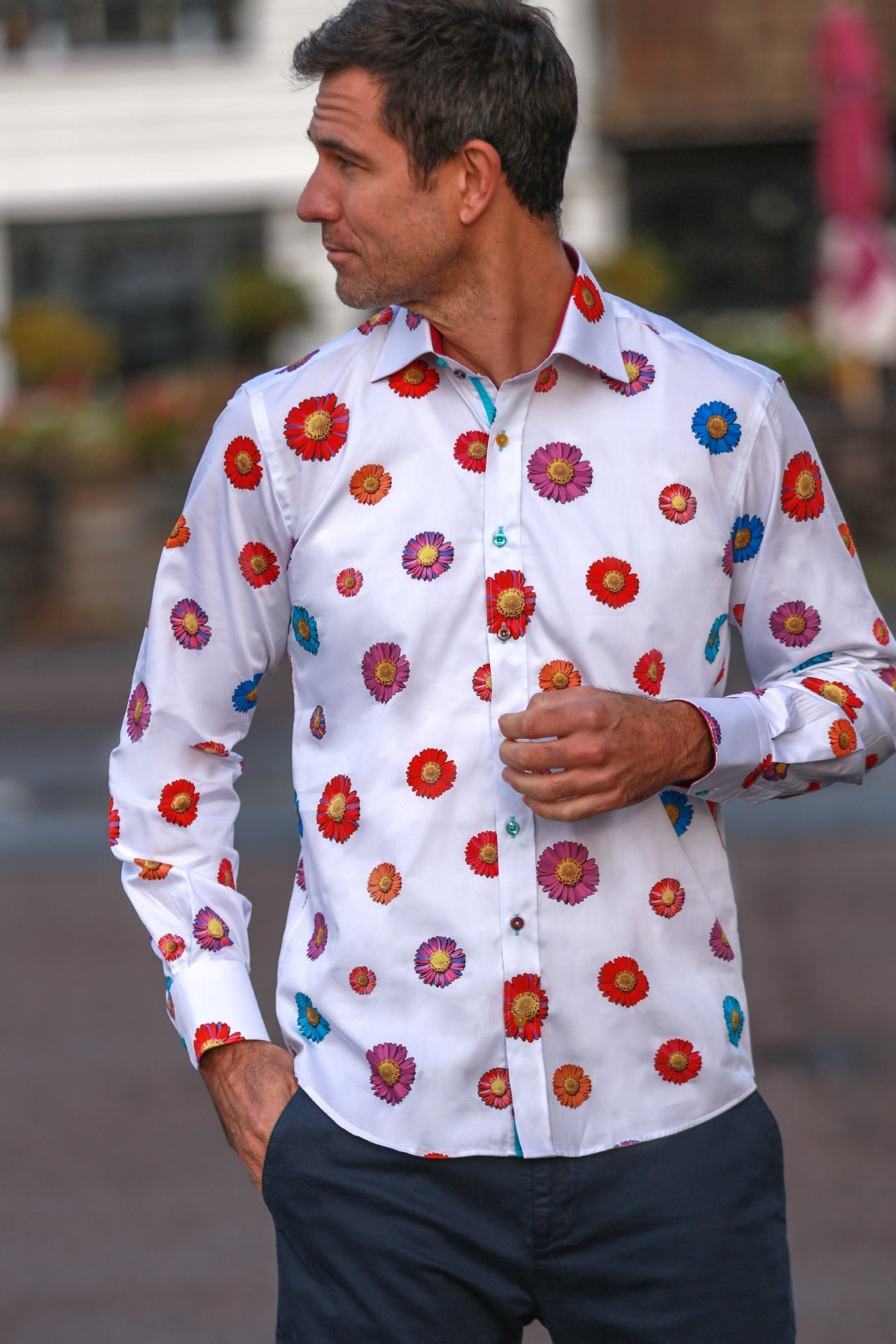
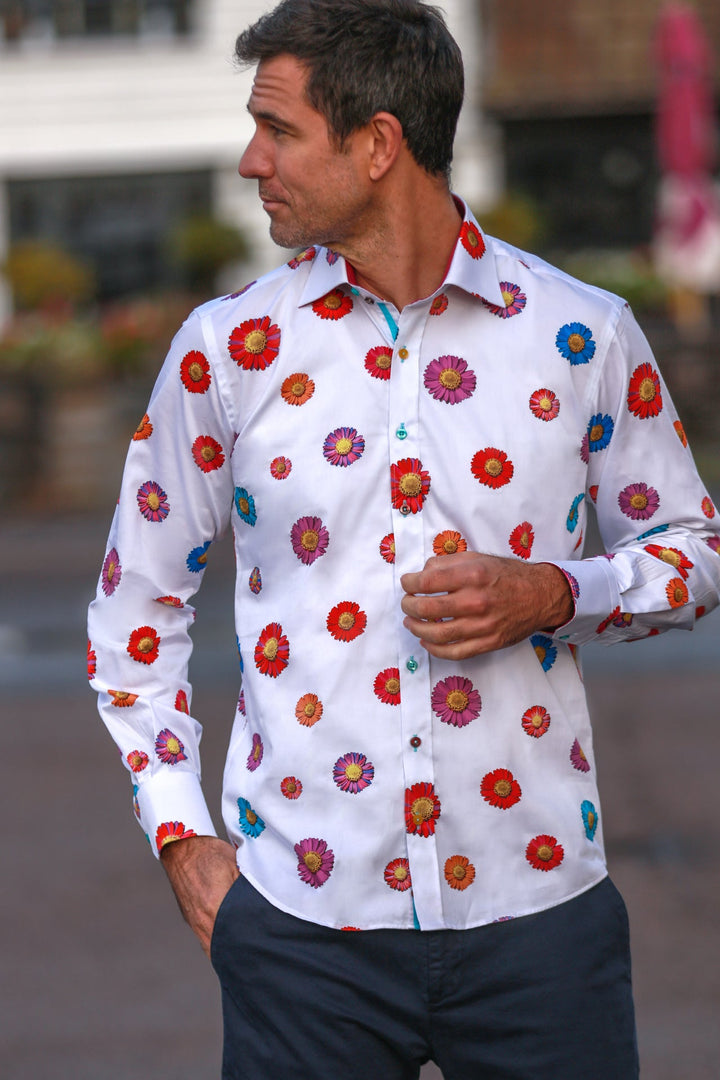
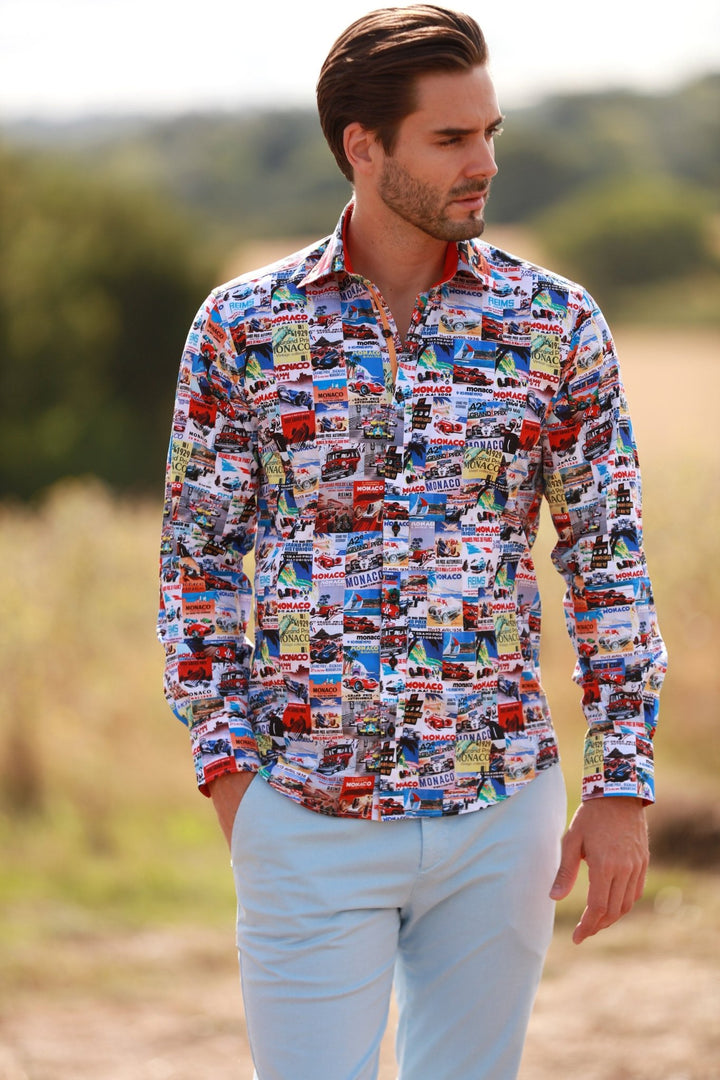
If you tuck, you need a touch more length so the shirt stays anchored when you sit and stand, roughly to the base of the seat. Many statement shirts, including ours, are cut with a slightly curved hem designed to be worn open and untucked over dark trousers or good denim, which is exactly how most men wear them to dinners, parties and paddock days.
Why Fit Matters Double on a Printed Shirt
A plain shirt hides its sins. A printed one confesses them. Excess fabric creases, folds and shadows the design; a print that should read as one continuous piece of artwork ends up crumpled like a poster left in a pocket. Too tight, and the pattern stretches and distorts across the chest. The right fit lets the print sit flat and uninterrupted, which is the entire point of wearing one.
Build matters here as well. Broader and more athletic frames often find that off the peg slim cuts pull at the chest while ballooning at the waist; we cover the specific adjustments worth knowing in our guide to wearing bold prints on an athletic or broad build. The short version: prioritise the shoulders and chest, and let a tailor bring in the waist if needed. It is a small cost against a shirt you will wear for years.

The 60 Second Fit Check
Before you buy, or before you walk out the door, run the sequence: shoulder seam on the bone; two fingers inside the collar; a pinch of one to two inches at the torso with no strain at the placket; cuff at the base of the thumb; hem at mid fly untucked. Five checks, one minute, and the difference between wearing a shirt and being worn by one.
Frequently Asked Questions
Should I size up or down if I am between sizes?
Fit the shoulders and chest first, using the selected garment’s measurements and the current size guide. Compare with a shirt that fits you and check comfortable movement before deciding between sizes. Ask a tailor which adjustments the actual garment permits.
How is a statement shirt supposed to fit compared with a formal shirt?
The checks are identical, but a statement shirt is usually worn open collared and untucked, so hem length and collar structure matter more, and you can afford a slightly trimmer body since it will not be tucked into trousers.
Do printed shirts run differently in size?
Not inherently, but cuts vary by style and brand. Compare the selected Claudio Lugli shirt’s garment measurements with a shirt that fits you, using the current size guide. Allow room to sit and reach comfortably rather than relying on a fit label alone.
Find Your Fit
A shirt that fits properly is the cheapest upgrade in menswear, and the foundation every bold print deserves. Explore the full range of men's printed shirts, from the summery Daisy Flower to the motorsport inspired Monaco Grand Prix, each cut to let the print do the talking, and each available in sizes designed around the five checks above.