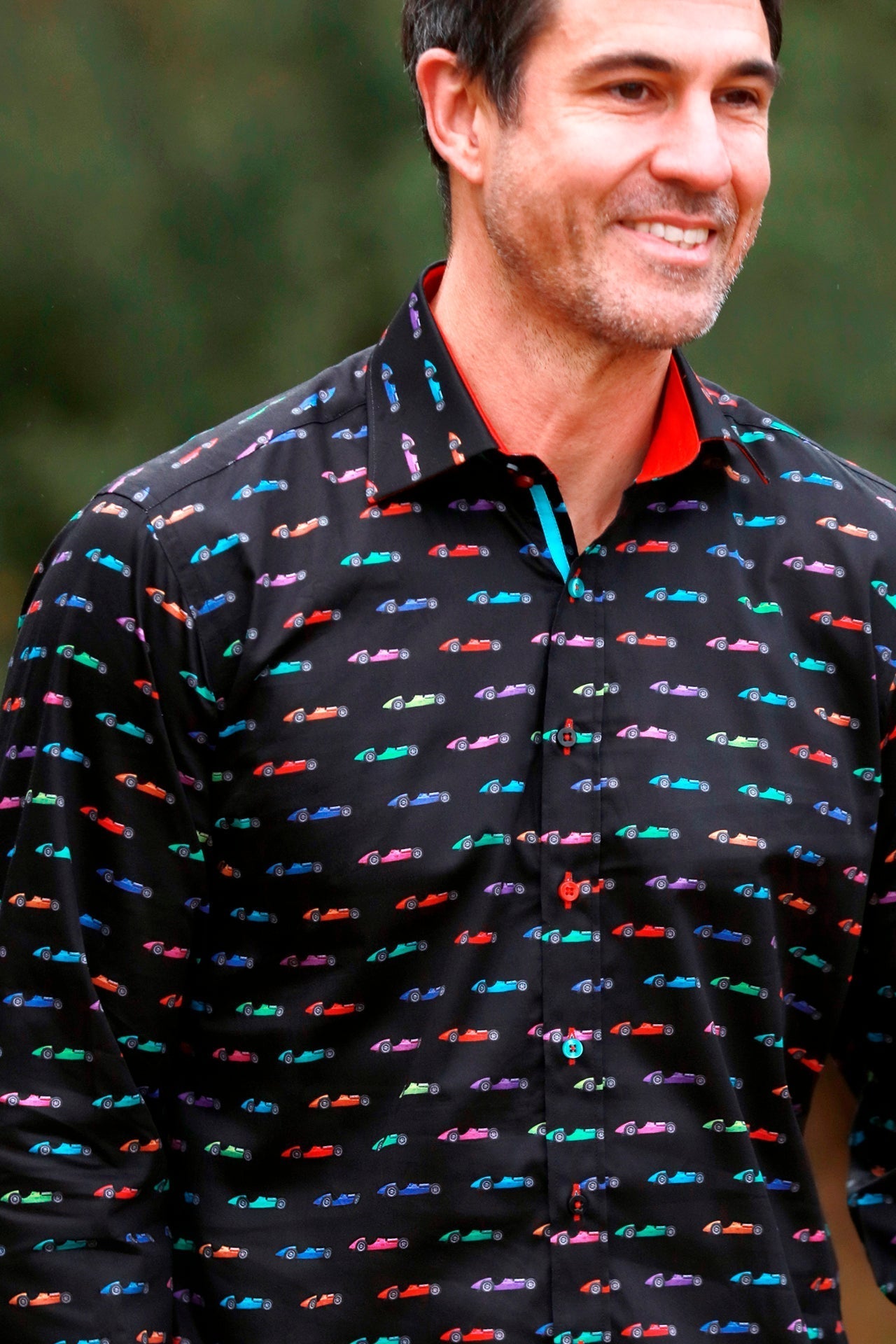
A label-led care check before the first wash
Check washing, bleaching, drying and ironing separately on the label. A washable cotton shirt, a mixed-fibre shirt and an embellished garment may need different treatment.
- Sort by colour and avoid abrasive items rubbing against the print.
- Check pockets, trims and closures before using a permitted wash cycle.
- Use detergent suitable for the garment and do not bleach when the label prohibits it.
- Dry and press according to the label, rather than assuming every print tolerates the same heat.
Gentle handling can reduce avoidable wear, but no wash method guarantees that colour will never change. For an uncertain label or specialist trim, ask the supplier before washing.
Read next
- How to Iron a Shirt Properly: Step-by-Step Guide
- What Is Satin-Weave Cotton? Premium Shirt Fabric Explained
Sources: GINETEX textile care symbols.
Explore fit, fabric and care in the Claudio Lugli journal.
A good printed shirt is an investment, and the fastest way to ruin one is the wash. Faded colours, a cracked print, a collar that's lost its shape — almost all of it is avoidable. As the London team who design and make these shirts, we get asked about care constantly, so here is the method we actually recommend.
The short version: follow the garment’s washing and drying label, using a gentle permitted treatment. The longer version keeps your shirts looking new for years.
Why printed shirts fade (and how to stop it)
Three things fade a print: heat, agitation and harsh detergent. Hot water and tumble-drying loosen dye and stress the fibres; aggressive spinning rubs the printed surface against itself and everything else in the drum; and bleach or heavy “brightening” detergents strip colour. Control those three and a quality print stays vivid for a very long time.
How to wash a printed shirt, step by step
1. Turn it inside out. This puts the printed surface on the inside of the drum, away from friction. The single most effective habit you can build.
2. Fasten and separate. Do up the buttons, and wash with similar colours only — never with towels or anything abrasive.
3. Wash cool, on a gentle cycle. Use the maximum temperature and cycle permitted by the garment label. Hand-wash and machine-wash symbols are different instructions, not interchangeable settings.
4. Use a mild, colour-safe detergent. A gentle liquid detergent — ideally one for colours or delicates. Skip bleach, optical brighteners and fabric softener, which can dull a print over time.
5. Spin low. A lower spin speed means less agitation and fewer creases to iron out afterwards.
If you only remember one thing: turn it inside out and keep the heat off it. That alone prevents most of the fading we ever see.
Drying without wrecking the print
Air-dry when the garment’s label permits that drying method. Reshape the damp shirt on a hanger and let it dry naturally. Avoid the tumble dryer — heat is the enemy of both print and fit. Dry away from direct, strong sunlight too, which can bleach colour over long exposure. Hanging while damp also does half your ironing for you.
Ironing and steaming a printed shirt
Choose ironing heat and steam from the garment label. Reverse pressing or a pressing cloth can reduce direct contact, but does not make excess heat or prohibited steam safe. Our full method is in How to Iron a Shirt Properly. Away from home with no iron? Here are 7 fast, iron-free ways to get creases out.

A note on fabric
Most Claudio Lugli prints are on satin-weave cotton, which is part of why the colours look so deep — and why gentle care pays off. If you're curious how the weave affects both look and longevity, we cover it in What Is Satin-Weave Cotton?.
Storing shirts so they last
Hang structured and printed shirts on decent, shaped hangers rather than folding them tightly, which sets creases into the print. Give them room to breathe in the wardrobe, and keep them out of prolonged direct sunlight.
Printed shirt care: FAQs
What temperature should I wash a printed shirt at?
Use the temperature and wash method stated on the care label; do not machine-wash a garment that requires hand washing or specialist cleaning.
Can you tumble-dry a printed shirt?
It's best avoided. Tumble-drying uses heat and heavy agitation, the two things most likely to fade a print and affect the fit. Air-dry on a hanger instead.
Should you iron a printed shirt on the print?
Avoid direct contact with sensitive print or trims and follow the label’s permitted heat and steam settings. Inside-out pressing does not remove those limits.
Does fabric softener damage prints?
It can dull them over repeated washes. A mild, colour-safe detergent with no bleach or optical brighteners is the safer choice.
Look after them well and they'll last for years. Browse the full men's printed shirts collection.