The Attitude Era as a change in visual language
WWE’s history timeline describes Steve Austin’s 1996 King of the Ring moment as an unofficial starting point for the Attitude Era. Era boundaries remain editorial labels rather than a dress-code rule shared by every performer.
Our fashion reading looks at stronger character symbols, high-contrast graphics and the relationship between costume and attitude. Compare individual outfits instead of assuming an entire period used one look. A logo tee, a dramatic coat and patterned ring gear communicate differently even within the same era. Use the official archive for events and dates, and the product listing for any modern garment’s design and rights statements.
Read next
- nWo: How a Faction Became an Iconic Visual Identity
- WWE Eras Explained: A Complete Guide From Golden Age to Today
Sources: WWE: official history timeline.
Explore style, culture and collaborations in the Claudio Lugli journal.
For a few electric years at the turn of the millennium, professional wrestling was the most talked-about thing on television. This was the Attitude Era: WWE's rawest, boldest, most rebellious chapter, when the company tore up its family-friendly rulebook and became appointment viewing for a generation.
What the Attitude Era was
Running from roughly 1997 to 2002, the Attitude Era was WWE's answer to a genuine ratings war, the Monday Night Wars against WCW. The response was edgier storytelling, sharper characters and a tone that spoke directly to teenagers and young adults who wanted something with bite. It worked: WWE went from underdog to cultural juggernaut.
The characters who defined it
The era ran on personalities. Stone Cold Steve Austin, the beer-swilling anti-authority everyman, became the biggest star in the business by refusing to do what he was told. And The Rock, all raised eyebrow and razor wit, turned the microphone into a weapon and became the most electrifying man in sports entertainment.

Then there was D-Generation X, the crew who embodied the era's whole spirit: rebellious, irreverent and impossible to control. Led at various points by Shawn Michaels and Triple H, DX made mischief the point and gave the era one of its most enduring logos.
Why it still matters to style
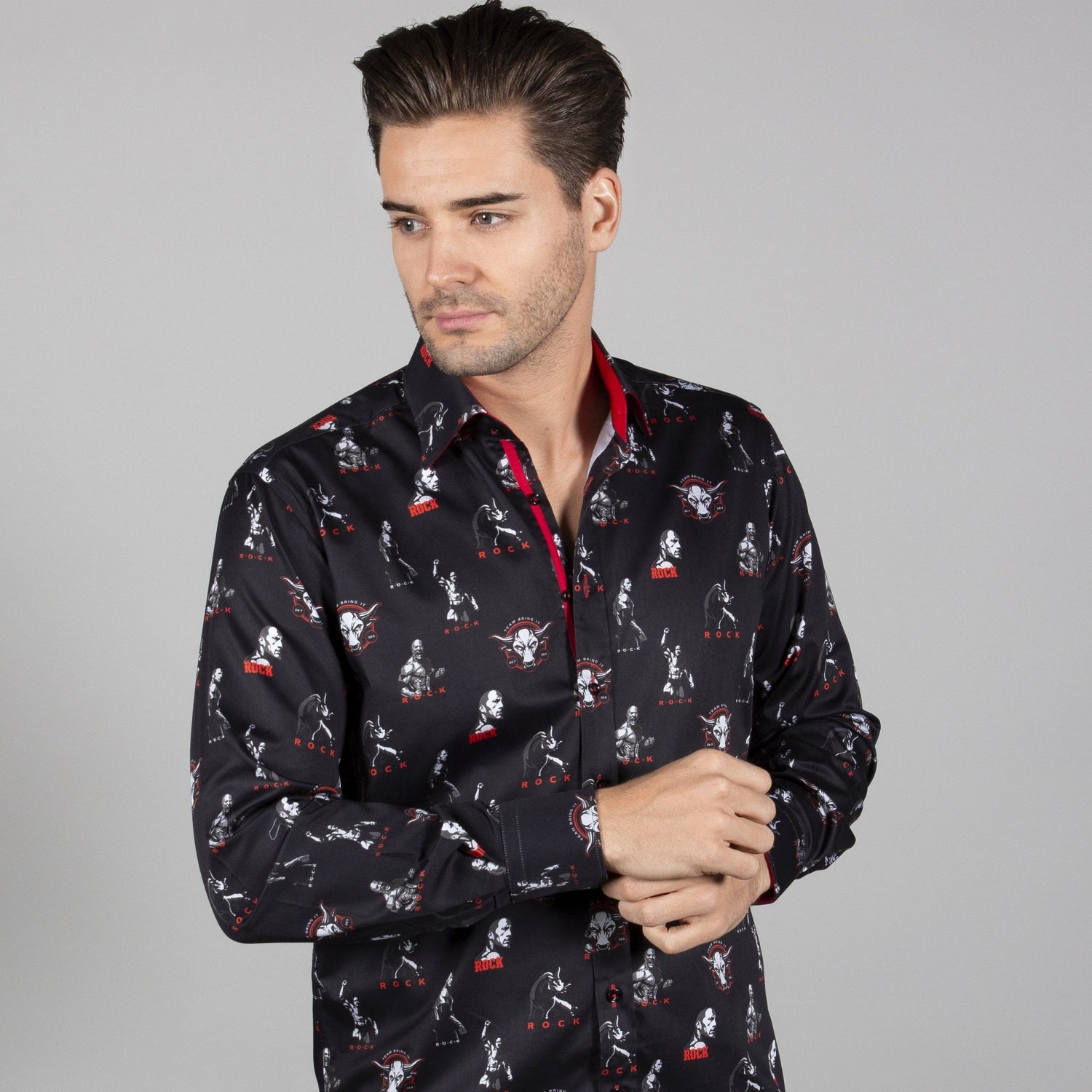
The Attitude Era was a visual moment as much as a storytelling one. The merchandise, all bold logos and blunt slogans and black tees worn as a badge, became streetwear before the word was fashionable. Wearing your favourite wrestler was a way of declaring an allegiance and an attitude. That instinct is exactly what a great statement shirt does now.

The officially licensed WWE: The Rock Icon Print Shirt and WWE: The Rock Legend Print Shirt carry that energy into a grown-up wardrobe, while the WWE: Shawn Michaels Icon Logo Print Shirt nods to the showmanship of DX. Explore them all in the WWE Icons Collection.
For the wider story, read WWE icons through the eras, go deeper on The Rock and Shawn Michaels, or find a present in our WWE gift guide.
The Attitude Era: FAQs
When was the Attitude Era?
Roughly 1997 to 2002, during WWE's ratings battle with WCW known as the Monday Night Wars.
Who were the biggest Attitude Era stars?
Stone Cold Steve Austin and The Rock led the way, alongside D-Generation X, Mankind, Triple H and many more.
Why was it called the Attitude Era?
Because WWE deliberately adopted an edgier, more rebellious attitude in its characters and storytelling to appeal to older audiences.
Explore the full officially licensed WWE Icons Collection.